Popular searches


It is time for a new Green Deal that everyone can actually get behind. Europe’s transport sector no longer debates whether decarbonisation is necessary. The real question now is whether Europe can reach net zero without weakening its own competitiveness in the process.
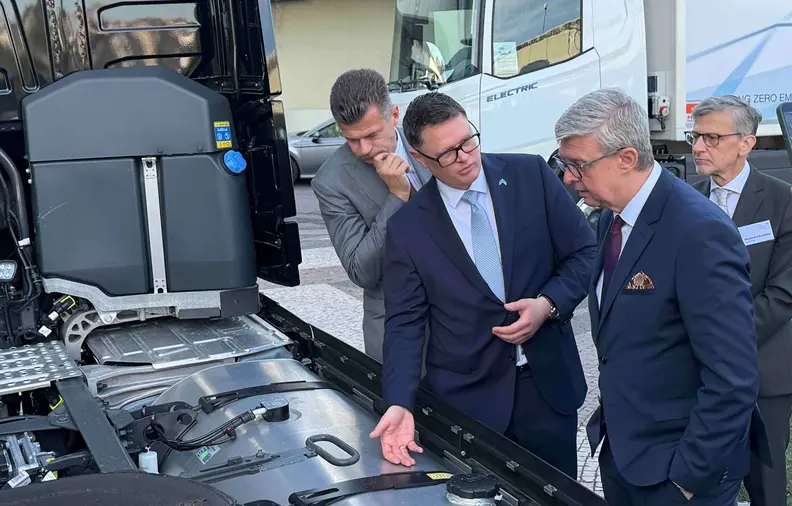
That challenge dominated discussions at the CEE Clean Energy & Mobility Summit 2026, held in Prague on 22 and 23 April, where policymakers, transport operators, fuel producers, automotive leaders and energy experts gathered to debate some of the most important issues currently facing the industry.
After moderating discussions with more than 50 speakers during the summit, I was left with five main conclusions:
One of the clearest signals from the summit was that nobody anymore questions the need for decarbonisation. The discussion has shifted toward much harder and more practical questions:
As Czech Deputy Prime Minister Karel Havlíček warned: “Decarbonisation must not destroy competitiveness.”
That sentiment resonated strongly across both policy and industry discussions.
The challenge is particularly critical in Central and Eastern Europe (CEE), where transport operators face structurally different conditions than many of their Western European counterparts:
But the core point is that pragmatism should not be mistaken for a lack of ambition. The people in the room were not resisting decarbonisation. They were asking how to make it work in the real world. That distinction matters enormously – and the summit showed that industry is ready to move.
If there was one phrase repeated throughout the summit, it was this: “There is no single solution.”
That message came from fleet operators, fuel producers and truck manufacturers alike. Heavy-duty road transport cannot rely exclusively on one technology in the near term, especially across long-haul operations.
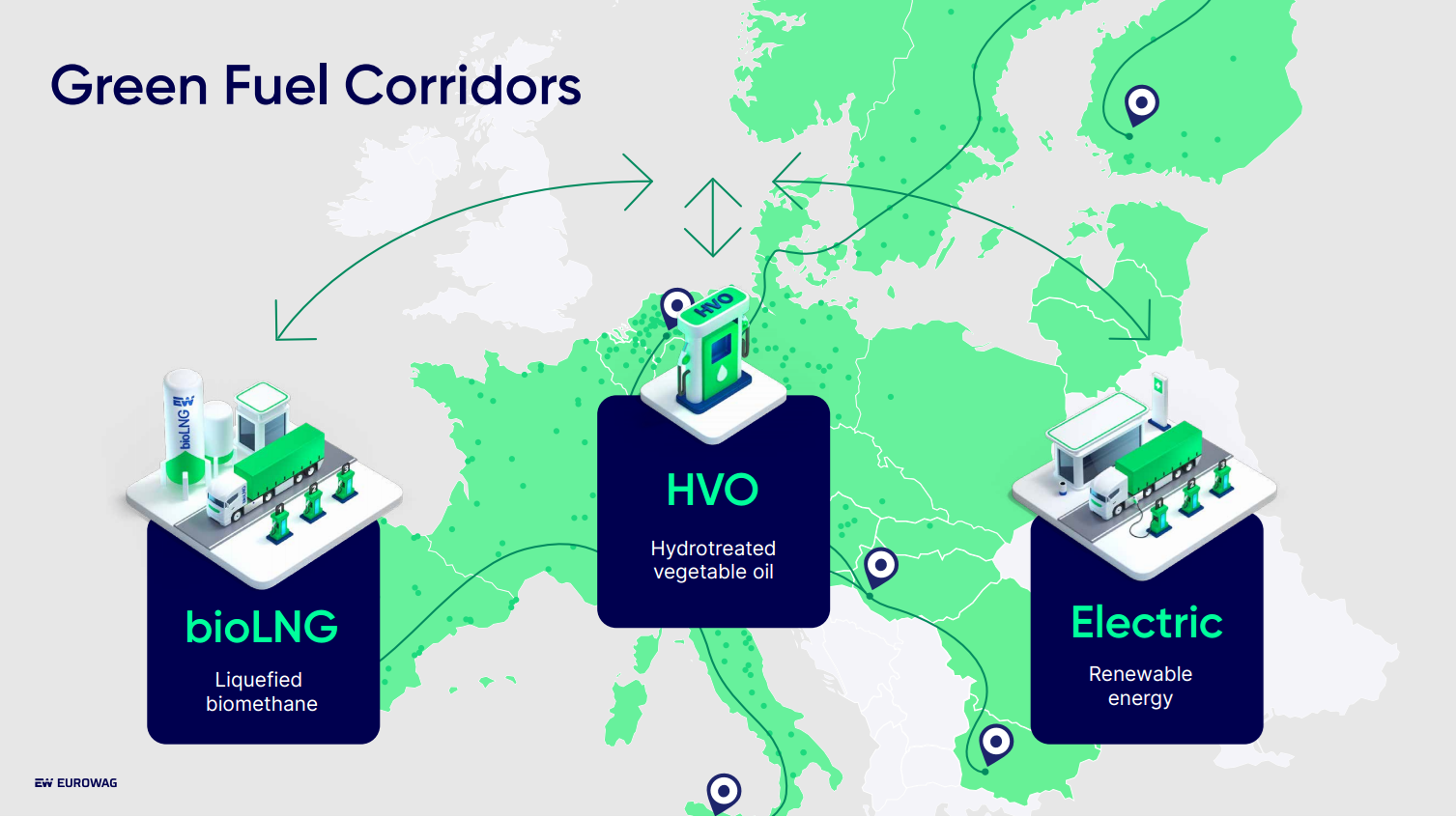
Instead, the discussions pointed toward a more pragmatic transition strategy centred on green fuel corridors that integrate multiple energy solutions.
In his keynote, Ulrich Kramer, head of the FVV Fuel Studies outlined the most efficient way to ‘defossilise’ transport. As he put it:
“We need a holistic approach that prevents carbon entering the atmosphere. To minimise emissions, we need technology neutrality and a mix of technologies.”
That perspective aligned closely with Martin Vohánka’s keynote, where he stressed the importance of being “energy agnostic” and focusing on reducing CO₂ rather than prematurely prescribing winners.
Zdeněk Petzl, representing the Czech automotive industry association AutoSAP, also urged policymakers to take a broader approach to decarbonisation:
“The European Commission must ensure that there is a role for decarbonised and renewable fuels,”
he said.
Real-world transport operators are already adopting this multi-technology approach in practice. Raben Group has been expanding the use of alternative fuels across its operations, including bioLNG and HVO, as part of its broader decarbonisation strategy. Through investments in lower-emission transport solutions and fleet modernisation, the company demonstrates how logistics providers can combine multiple technologies to reduce emissions while maintaining operational flexibility.
One reality became impossible to ignore throughout the summit: infrastructure deployment is not keeping pace with political ambition. This issue surfaced repeatedly in conversations around heavy-duty charging, hydrogen availability and cross-border corridor planning.
Transport companies cannot invest confidently into new fleets if the supporting infrastructure remains uncertain. Several speakers pointed out that the economics become particularly difficult in CEE markets where long-distance freight dominates operations and charging networks remain fragmented.
Questions around grid readiness, charging speeds, depot investments and permitting delays also emerged. Without coordinated infrastructure deployment, Europe risks creating regulatory pressure without operational feasibility.
Investing into electric or hydrogen fleets before charging corridors, grid capacity and cross-border interoperability are fully developed creates a level of commercial uncertainty that many fleets, particularly smaller regional carriers, simply cannot absorb.
As a result, CEE freight operators and logistics companies stressed that Europe urgently needs functional alternative fuel corridors and strategically located refuelling infrastructure before decarbonisation can scale operationally across international freight networks.
While sustainability targets are increasingly driven by customers, investors and regulation, operators are simultaneously dealing with:
Joanna Górna, Sustainability Manager at Raben Group, brought an important operational perspective to the discussion:
“We are focused on fulfilling the needs and requirements of our customers and our customers, especially big shippers, are monitoring their CO₂ footprint and trying to reduce it.”
In this context, low-emission fleets are becoming a competitive advantage in tenders where shippers increasingly require measurable emissions reductions, but Pavol Piešťanský from ČESMAD Slovakia highlighted the commercial challenge:
“Customers don’t want to pay a premium for sustainable transportation.”
That comment captured one of the summit’s central dilemmas. The industry is being asked to decarbonise rapidly while still competing in an intensely price-sensitive market where many customers continue to prioritise cost over sustainability.
Pavol also reminded participants that there are currently only 27 electric trucks operating in Slovakia, underlining how early the transition still is in many CEE markets.
Another recurring theme was that decarbonisation is increasingly linked with digitalisation. Companies are relying on telematics, AI-supported fleet management and integrated transport management systems not only to reduce emissions, but to survive commercially in an increasingly cost-sensitive environment.
Across the industry, digitalisation is becoming not just a productivity tool, but a resilience strategy.
What comes next?
One of the most encouraging outcomes of the Prague summit was that the discussion did not end when the conference closed.
Immediately after the event, business representatives and policymakers agreed on the importance of continuing the dialogue, particularly from the perspective of CEE.
In this context, Eurowag has agreed with Czech Member of the European Parliament Ondřej Krutílek to organise a dedicated roundtable discussion in Brussels in September 2026 focused on the future of decarbonisation and competitiveness in European road transport.
The goal will be to bring together EU policymakers, transport operators, energy providers and industry representatives to continue addressing some of the summit’s central questions:
The Brussels roundtable will aim to continue this pragmatic and solution-oriented discussion with European institutions and industry stakeholders alike.
Because ultimately, Europe will only succeed in decarbonising transport if climate ambition and economic competitiveness move forward together.
.png)