Popular searches


Hauliers are facing growing pressure from rising costs, driver shortages, and decarbonisation requirements. Digitalisation, automation and more efficient operations management play a key role.
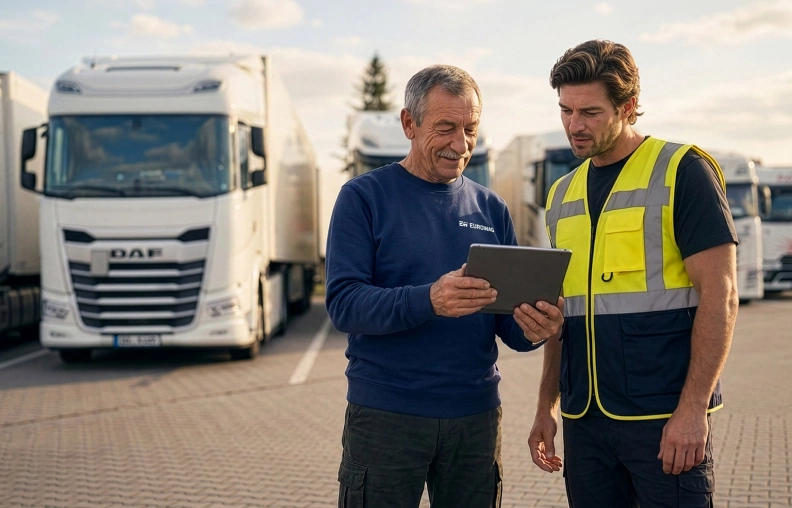
European road transport is undergoing a major transformation. Transport operators across Europe are facing a shortage of more than 500,000 drivers, while a further 660,000 are expected to retire by 2030. At the same time, operating costs are rising and pressure to reduce emissions is increasing. These are among the key findings of the latest edition of Eurowag’s Transforming Transportation in 2027 report, which highlights the crucial role of digitalisation, automation and more effective use of data in addressing these challenges.
The Transforming Transportation report is now in its third edition and explores the key trends shaping the road transport sector in Europe. This year’s report presents insights from eight European markets and features 24 customer success stories in three categories: “Market Leader,” “Sustainability Star” and “Technology Innovator.” The experiences of these companies show how the transport business is responding to the economic, technological and environmental changes transforming the entire sector.
The report also shows that the future competitiveness of transport companies will increasingly depend on their ability to use data effectively, automate processes and optimise day-to-day operations.
In an environment of rising costs, digitalisation is no longer just a technological advantage. It is becoming an essential tool for more efficient fleet management, cost control and protecting profit margins. Transport companies are increasingly integrating fleet management, refuelling, toll payments, telematics and financial data into unified digital systems.
Administrative automation, intelligent route planning, fleet management and the use of artificial intelligence help reduce operating costs, boost productivity and improve decision-making. By leveraging real-time data, companies can identify inefficiencies more quickly, optimise vehicle utilisation and respond more effectively to operational changes.
One of the fastest ways to improve operational efficiency and reduce emissions is not necessarily to replace the vehicle fleet. Significant potential lies in more efficient transport planning, reducing empty runs and encouraging more fuel-efficient driving.
Data is key to unlocking these savings. Hauliers with access to both operational and financial information in one place can better monitor vehicle utilisation, fuel consumption, the costs of individual routes and price differences between fuel stations.
"Transport is becoming increasingly complex, and companies need fast access to high-quality data to support day-to-day decision-making. Integrating operational and financial information into a single digital platform like Eurowag Office helps transport companies manage costs more effectively, improve efficiency and protect their long-term profitability,"
says Francesco Nazzarri, Chief Product and Commercial Officer at Eurowag.
Another option is to switch to lower-emission fuels, such as HVO100 LNG, or to transition to e-mobility. HVO100 can be used in compatible diesel vehicles without the need for major technical modifications, and it can reduce CO₂ emissions by up to 90% over its entire life cycle. This makes it a more viable option for carriers. However, truck fleet electrification requires significant investment, and the further development of high-power charging corridors is essential. Eurowag is starting to build reliable infrastructure at its own truck parks (the first charging hub for trucks will be opened in the Czech Republic this month) and through strategic partnerships with key charging infrastructure providers across Europe.
Alongside rising costs and pressure to decarbonise, the shortage of professional drivers remains one of the biggest challenges facing the European road transport sector. According to the report, the European market faced a shortage of approximately 502,000 drivers in 2025, with an ageing workforce further exacerbating the problem. A further 660,000 drivers are expected to retire by 2030.
Transport companies are therefore looking for new ways to make the profession more attractive and retain qualified employees. Working conditions remain a significant issue. The lack of safe, well-equipped parking facilities in the European Union, with an estimated shortfall exceeding 390,000 spaces, continues to affect both drivers and transport companies daily.
The experiences and stories of the participating companies show that there is no one-size-fits-all solution for the entire European market. What they have in common, however, is a pragmatic approach to innovation: they adopt technologies and new practices where these deliver measurable operational or economic benefits.
“European transport is not defined solely by statistics and trends, but above all by the companies that strive to improve their efficiency and reduce their environmental impact every day. Each company must select solutions that address its unique requirements and operational circumstances. The ability to make the right decisions based on data from all services from a trusted partner on one platform will be crucial to the future competitiveness of transport companies. We believe that the experiences presented in this report can also inspire other companies in the industry,”
concludes Francesco Nazzarri.
About Eurowag:
Founded in 1995, Eurowag is a leading technology company and key partner to the European CRT industry, committed to making it cleaner, fairer and more efficient. Eurowag enables hauliers to transition successfully to a low-carbon, digital future by consolidating critical data, insights and payment and financial transactions into a single ecosystem, seamlessly connecting operations before, during and after delivery. For more information, visit https://www.eurowag.com/.
Media contact:
EUROWAG
Whether you run one truck or a fleet of thirty, manage fuel cards, vehicles, routes, tolls, bills and invoices in one connected platform.

One card for fuel, tolls, parking, tunnels and ferries with cashless payments across Europe and built-in fraud protection.

Track vehicles in real time, plan smarter routes and improve driver performance.

Pay tolls with one EETS-certified device and centralized billing across Europe.

Reclaim VAT and fuel excise duties automatically without paperwork or manual processes.

Move towards lower-carbon transport with HVO, bioLNG and electric charging across Europe.