Popular searches


Across Europe, truck tolling is shifting toward a clear principle: you pay for what you use, and less if you operate more efficiently. Since July 2026, the Netherlands has introduced kilometre-based truck tolls, aligning with systems already established in Germany, Austria, and Belgium. Before July, it has been one of the few European markets without distance-based tolling on most of its motorways.For transport companies, this marks an important evolution. Truck toll costs are no longer a fixed administrative expense, but a factor directly linked to how vehicles are operated, creating new opportunities to optimise routes, fleet composition, and overall cost efficiency.
.webp)
The current Eurovignette is a time-based charge: every truck pays the same fixed fee regardless of how many kilometres it actually drives in the Netherlands. A fleet making daily transits pays the same as one crossing the border once a quarter. The new kilometre-based system changes this. Charges reflect actual road usage, meaning fleets that drive less, pay less. Vehicles that meet higher emission standards benefit from lower rates. And transport companies gain something the vignette never offered: a direct, measurable link between road use and cost.
This is not a uniquely Dutch development. Distance-based tolling linked to emissions is already the standard in Germany, Austria, Belgium, and many other European markets. The Netherlands is aligning with this established framework.
This article explains how truck tolls in the Netherlands work now, how the kilometre-based system operates, and how international fleets can manage toll payments efficiently using EETS solutions.CTA button: Explore Eurowag toll services
Across Europe, road charging is moving toward a clear and consistent principle: pay for what you use, and pay less if you pollute less. This approach is embedded in European transport policy and reinforced by the EU Transport & Road Charging framework and the revised Eurovignette Directive.
Until now, the Dutch system relied on the Eurovignette, a time-based charge that allowed trucks to use major roads for a fixed period. While administratively simple, the Eurovignette does not reflect how intensively roads are used, nor does it differentiate meaningfully between cleaner and more polluting vehicles.
From a policy perspective, this creates two problems:
For transport companies, this marks a clear shift. Toll costs will no longer be a fixed administrative expense but a variable operating cost that changes with kilometres driven, vehicle type, and fleet composition. This aligns the Netherlands with a broader European trend and signals that distance-based tolling is becoming the norm rather than the exception.
The answer is clear - No.
Under the new system, truck toll roads in the Netherlands include all motorways (A-roads) as well as selected national, provincial, and municipal roads.
This broad scope is intentional. One of the key objectives of the Dutch reform is to prevent traffic diversion. If tolls applied only to motorways, heavy vehicles might divert to secondary roads, increasing congestion, safety risks, and infrastructure wear in urban or residential areas.
For international transport companies, the practical consequence is straightforward: most long-distance truck movements in the Netherlands will be tolled, including transit traffic between Belgium and Germany. Fleets should assume that nearly all professional truck driving in the country will fall under the new system.
The pricing structure of Dutch truck tolls is now in force and is based on kilometres driven, vehicle weight, and emissions category.The new pricing structure gives fleet managers something the Eurovignette never could: cost transparency tied directly to actual road use.Fleets with modern, low-emission vehicles are expected to benefit from lower toll rates, while older or heavier trucks will incur higher charges per kilometre.
For fleets with intensive operations, total toll expenditure will reflect actual road use more accurately, giving operators a clearer basis for cost planning and route decisions.Toll expenditure will fluctuate depending on routing decisions, vehicle deployment, and operational intensity. As a result, toll management becomes closely linked to broader cost-control strategies such as route optimisation, vehicle utilisation, and fleet renewal planning.
Transport companies can pay Dutch truck tolls through authorised toll service providers. For fleets operating internationally, the most efficient and scalable option is an EETS solution.
The European Electronic Toll Service (EETS) allows transport companies to pay tolls across multiple European countries using:
This significantly reduces administrative complexity compared to managing separate national toll systems. Instead of juggling multiple devices, registrations, and payment processes, fleets can centralise toll management across borders.
For transport companies looking for a reliable EETS provider, Eurowag offers a proven toll solution covering multiple European countries, including the Netherlands.Registration typically involves:
Once set up, fleets can manage Dutch truck tolls alongside other European toll systems through a single platform and consolidated invoice, improving visibility and control over toll-related costs.
Now that the Dutch truck tolls system is in force, successful preparation is necessary. Fleet managers and transport companies need time to assess toll cost impacts, review fleet composition, update vehicles, and select the right toll payment partner.These steps are essential not only for compliance, but also for maintaining cost control and competitiveness in the Dutch and wider European transport market.
The Netherlands may be changing how truck tolls work, but with the right preparation and professional toll management setup, it does not have to change how efficiently your fleet operates. Companies that adapt early can turn the 2026 reform into a competitive advantage as distance-based and emission-linked road charging becomes the European standard.
The Dutch truck toll system is strictly enforced. Driving without a valid OBU or an active toll account can result in:
Because toll collection is automated and satellite-based, non-compliance is very easy to detect.
The introduction of kilometre-based truck tolls marks a structural shift for logistics operations in the Netherlands.
Toll costs are becoming more closely tied to actual performance. Fleets that invest in modern vehicles, plan routes efficiently, and manage tolls professionally will gain a clear competitive advantage. Those that delay preparation risk higher costs, administrative friction, and compliance issues.
At the same time, the reform reflects a broader European trend. Distance-based tolling linked to emissions is becoming the standard across the EU. Managing Dutch truck tolls in 2026 is therefore not just about one country, but about future-proofing fleet operations across Europe.
Since 1 July 2026, Dutch truck tolls have been distance-based. Trucks over 3.5 tonnes must use an OBU to record kilometres on tolled roads, replacing the Eurovignette system.
No. Since 1 July 2026, the Eurovignette has been abolished in the Netherlands, and tolls are charged per kilometre driven on Dutch tolled roads.
All motorways (A-roads) and selected national, provincial, and municipal roads will be tolled to ensure fair cost allocation and prevent traffic diversion.
Toll costs depend on kilometres driven, vehicle weight, and CO₂ emission class. Fleets with modern, low-emission trucks benefit from lower rates.
Toll payments can be made via authorised providers. For international fleets, EETS solutions like Eurowag Toll Services simplify cross-border payments with one contract, one OBU, and one invoice.
EETS is not mandatory, but it’s the easiest way for international operators to manage tolls efficiently and maintain full cost transparency. Without it, fleets face separate registrations, devices, and billing for the Netherlands.
.png)
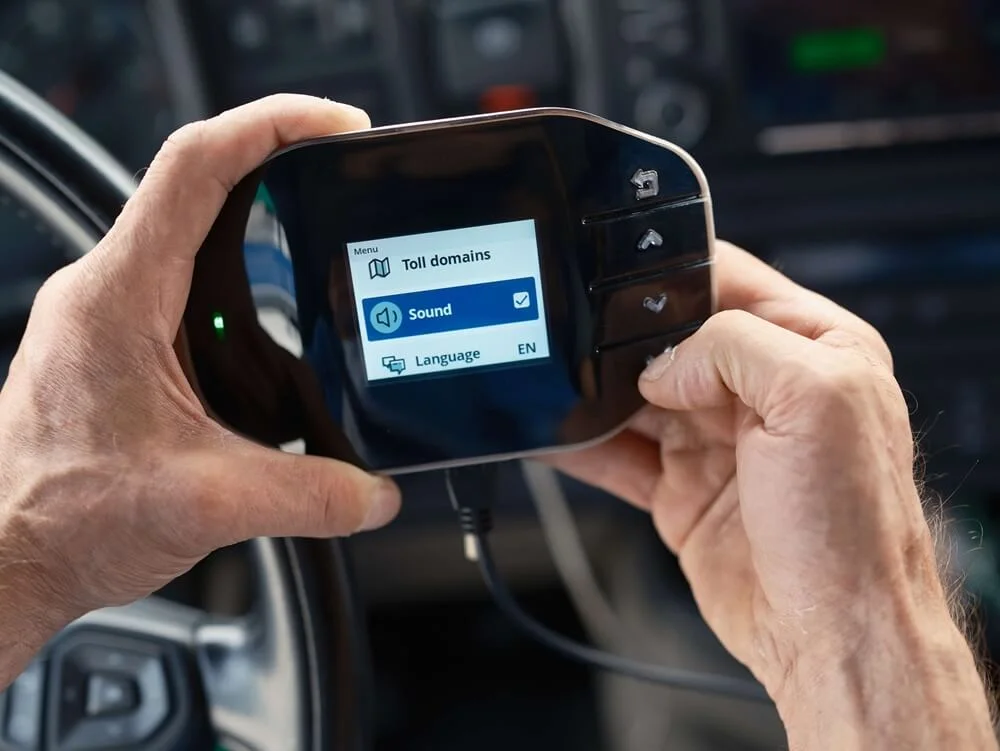
Stop juggling multiple toll systems. With a single EETS-certified OBU, you handle toll payments automatically, accurately and with every cost under control.